Local Rules
Yard Trash and Household Garbage Are Two Different Streams
The single most-broken rule in the city, and the reason a lot of bins get left at the curb untouched.
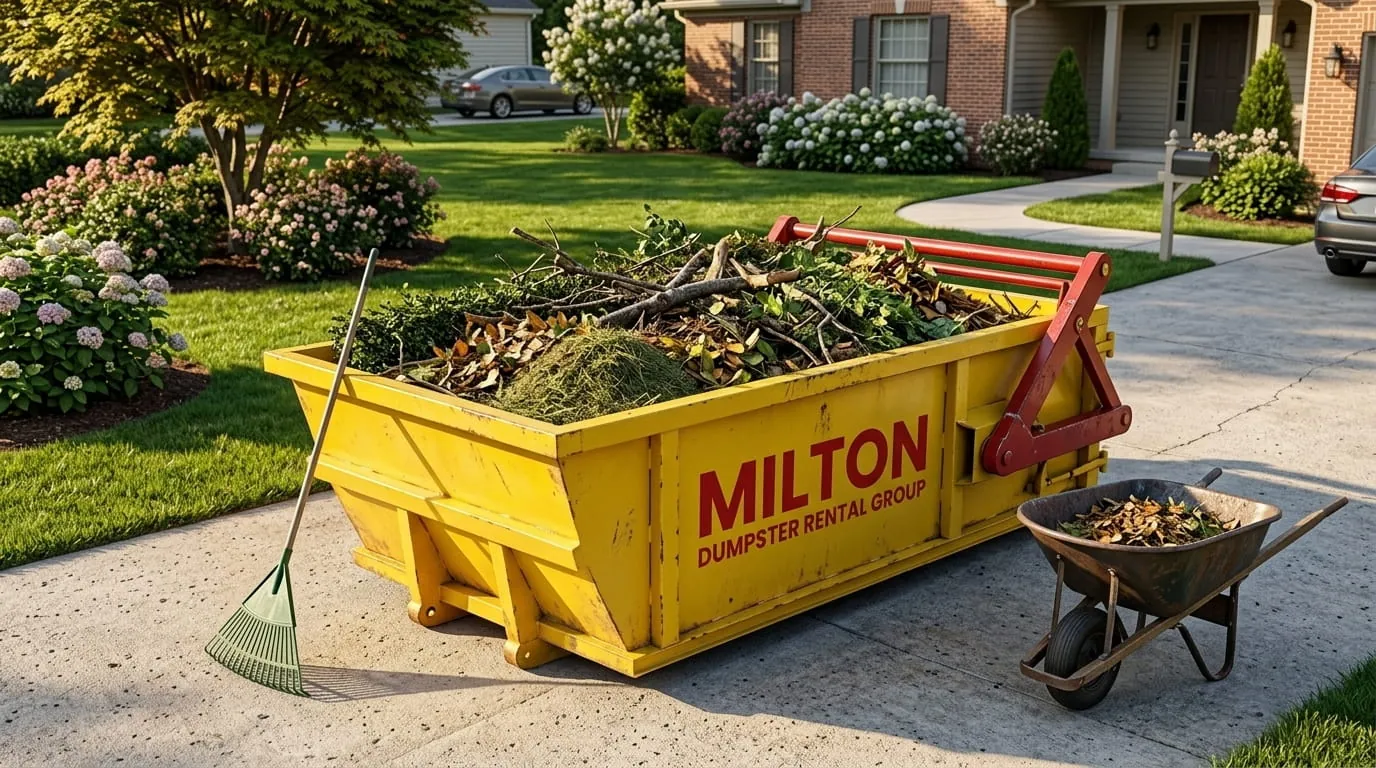
The rule people break most
If a bin gets left behind in Milton, this is usually why.
It is an easy mistake to make. The bin is there, it is on wheels, the leaves are right next to it. But the two streams go to different places and are handled differently, and a contaminated container is one the crew cannot take.
Bagged, and off the street
Leaves and grass have their own presentation rules:
- They must be bagged. Not loose in a bin, not raked into a heap.
- They go at the curb, off the street. On the verge, not in the roadway.
- Pickup is once a week.
"Off the street" matters more here than it might sound. Material in the roadway blocks drainage, and in a part of the world that gets genuinely heavy rain, a blocked storm drain is not a technicality. It is also a hazard for traffic and a nuisance for street sweeping.
Brush and limbs: the dimensions
Brush and limbs do not need bagging, but they do need to be within specified dimensions:
| Item | Limit |
|---|---|
| Pile length | No more than 6 feet |
| Pile height | No more than 4 feet |
| Limb length | Up to 4 feet |
| Limb diameter | No more than 6 inches |
| Weight, any single item | No more than 50 pounds |
| Piles per week | One, within the free allowance |
The dimensions are there because the material is collected by hand and by a specific piece of equipment. Anything longer, thicker or heavier than the spec has to be handled differently, which is why it gets left.
Practical advice: cut as you go. A limb cut to four feet as it comes down takes seconds. The same limb cut after it has been dragged to the curb and buried under everything else takes considerably longer.
⚠️ The 50 pound limit
Worth its own section because it is the one that catches people out, and because it is not obvious by eye.
No individual item of yard trash may weigh more than 50 pounds.
Fifty pounds of dry leaves is an enormous bag. Fifty pounds of wet oak limb is a surprisingly short piece of wood. Things that reach the limit faster than people expect:
- Wet leaves and grass after rain. The same bag can double in weight overnight, and we get real rain here.
- Green limbs. Freshly cut wood is full of water and far heavier than seasoned timber.
- Live oak. Genuinely dense, and there is a lot of it around here.
- Root balls with soil attached. Soil is the heaviest thing in any garden. Shake it out.
- Palm fronds and trunk sections, which are wetter and heavier than they look.
If a bag splits when the crew lifts it, that is a bag that does not get collected — and now it is loose material in the street, which is its own problem.
Why the streams are kept apart
Not arbitrary. Yard trash is organic material with a genuine onward use — it can be composted, mulched or processed as a recovered material. Household garbage cannot.
The county segregates recovered materials at its Central Landfill for exactly this reason, with metal, masonry and yard waste kept in their own areas. Once yard trash is mixed with household garbage, all of it becomes garbage and the onward route is lost.
So the separation is not a hoop to jump through. It is the whole point, and it is also why the same logic applies to containers: a clean load of brush has a cheaper route than the same brush with fence panels and plastic pots mixed in.
What is not yard trash at all
Several things that come out of a garden are not yard trash, and putting them in that stream contaminates it:
- Treated timber. Fence posts, deck boards, landscape ties, raised beds — nearly all exterior wood on a property here is treated, and none of it is yard trash.
- Fence panels and hardware, painted or not.
- Soil, sand and sod. Heavy, and not organic garden refuse in the sense intended.
- Pots, trays and irrigation pipe.
- Screen room framing and mesh. A very common item here after a storm, and it is construction material.
- Concrete edging, pavers and rock.
- Stumps. Far past any dimension limit.
A landscape rebuild almost always produces a mix of all of these, which is why the whole job usually wants a container rather than an attempt to split it across streams.
When one pile is not enough
The free allowance is one pile a week. That covers ordinary garden maintenance comfortably and stops covering anything the moment a real job starts.
Where we usually come in:
- A tree down. One mature live oak is many weeks of one pile.
- Storm damage, which arrives all at once and does not wait for weekly collection.
- Whole-garden clearance on a property that has been let go.
- Landscape rebuilds, which mix green waste with timber, hardscape and soil.
- Lot clearing before a build.
- Acreage work out in the north county, where there is simply more of everything.
If you book a container for green waste, keep it clean and tell us that is what it is. Clean brush and prunings have their own route; the same load with treated timber in it does not.
A pre-collection checklist
- Household garbage in the roll-out container, and nothing else in there
- Leaves and grass bagged, at the curb, off the street
- Brush piles no more than 6 ft long, 4 ft high
- Limbs up to 4 ft long, no more than 6 inches thick
- Nothing over 50 pounds — check the wet bags especially
- Shake the soil off root balls
- Treated timber out of the yard trash entirely
- Fence panels, pots and screen framing out — they are not yard trash
- Cut limbs to length as you go, not after they are stacked
- If it is more than one pile, price a container against the City's additional charge
Presentation rules and dimensions change, and this is a summary rather than the code. Everything above applies inside the City of Milton. Unincorporated Santa Rosa County has no municipal yard trash service - arrangements there depend on your own hauler. Confirm current requirements with the City.
Need a container in Milton?
Call and describe the job. Three minutes on the phone gets you a size recommendation, a flat rate and a delivery window — and we will tell you if a smaller, cheaper container is the right answer.
Call (850) 750-5529